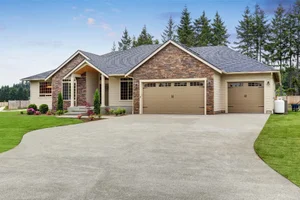
Featured Image.
Alt-tag: An old, possibly abandoned house.
You've got your eyes on an ugly duckling of a house that nobody seems to want. The house is in dire need of renovation, and there's a long way to go before it turns into the beautiful swan that you believe it can be. The price is a true gem as well, making you seriously consider acquiring said property. While you are debating whether to make an offer, let us guide you through the basics of buying a home that's a fixer-upper. Armed with the newly found knowledge, you should have an easier time coming to a decision.
What Is Considered an Ideal Fixer-Upper?
In all of its essence, a perfect fixer-upper is basically a house that has the potential to be divine. It's a property that currently lacks appeal, but it might be highly desirable in the future. With the right work done around it, that is. Many homebuyers give up on buying properties that are sold "as is". It's much easier for them to purchase "move-in" ready housing instead. And while there surely are benefits to doing that, there seems to be something oddly satisfying in buying a property that requires updating to be made into something glorious.
Fixer-uppers aren't considered only houses that require extensive repair to be habitable. They might simply be pieces of property with a few flaws that can easily be corrected. Either way, they hold real potential. Potential of making big money, should one ever decide to sell them after making upgrades. With that said, not each one of these properties is worth fighting for. There are those that are beyond repair, in which case, moving on to the next one is highly advisable.
Is Buying a Home That's a Fixer-Upper Ultimately a Good Idea?
That depends on a couple of factors, all of which we are about to discuss further.
The Location of the House
First up is the location. If the house is located in difficult terrain, you definitely shouldn't be spending your hard-earned cash on it. The same is true of properties situated in unsafe parts of the city or those next to busy roads. If you are really serious about acquiring a fixer-upper, ideally, you want it in an up-and-coming neighborhood. When looking at potential candidates, pay close attention to the other homes in the area, too. Take note of their appearance, and do your homework as far as their price-point is concerned. That way, you'll know for sure if the fixer-upper you've been eyeing is honestly worth all the trouble.
The Size and the Layout
Many would say that the size doesn't matter much, but if we're talking about fixer-uppers, it actually does! Especially if you are looking to flip the house, in which case, buying bigger equals making a higher profit. It's all the same if living in it is the plan, as you'll be getting more space for less money.
In terms of the layout, you want to stay clear of those with an awkward one since moving walls could prove either too costly or straight-up impossible. Each room should be spacious, with enough space left for moving around even with furniture in them. The best-case scenario is that the kitchen has multiple entrances, and the master bedroom is located on the first floor. Open floor plans are highly desirable, too, but aren't as often seen in fixer-uppers, which tend to be older homes.
If you've already made up your mind about buying a home that's a fixer-upper and have stumbled upon one with an excellent layout, congratulations! You may very well start your life in it now. Of course, in order to move within the area with ease, you'll first have to seek the assistance of a professional local moving company. Ask people you trust for recommendations. Furthermore, do your own research into their work, remembering to check whether they are entirely insured and licensed to do business.

Caption: The importance of an excelled layout when buying a home that's a fixer-upper must be stressed! In short, open floor plans, spaciousness, and a master bedroom on the first floor are some of the highly desirable characteristics.
Alt-tag: The inside of an old, spacious house.
The Condition of the House
It's clear as day that a fixer-upper needs upgrading. However, not all problems they face are equally problematic. A line should be drawn between what is considered acceptable and what definitely isn't. With that said, let's take a closer look into what counts as minor issues, and are therefore easier to fix.
Wall cracks & peeling wallpapers
Broken light fixtures
Broken windows
Faulty outlets
Loose or broken door hinges
Buckled floors
Cracked exterior
The following are issues that are neither easy nor cheap to deal with, but still fixable.
Problems with the HVAC system that either require it to be repaired or replaced with a new one
Problems with the roof, including leaks, missing shingles, cracking, and blistering
Poor wiring
A variety of plumbing issues
Kitchens and bathrooms that aren't functional and must, therefore, go through a complete renovation and a remodel
Bad insulation
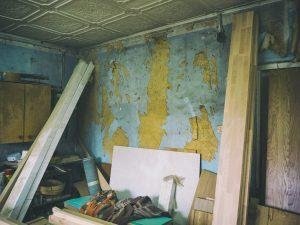
Caption: Peeling paint or wallpapers are considered issues of a smaller scale. Ones that can easily be dealt with.Alt-tag: Peeled paint, a small issue that could persuade buyers that buying a home that's a fixer-upper might be a good idea
What Must Be Done Before Buying a Home That’s a Fixer-Upper?
We recommend getting a home surveyed by professionals before sealing the deal to shield yourself from unforeseen expenses. You'll definitely want to make sure the property passes these:
General home inspection
Roof inspection
Foundation inspection
Pest inspection
Electrical & plumbing inspection
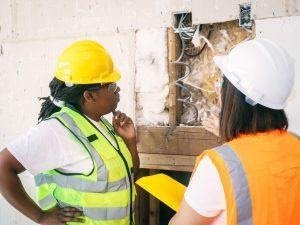
Knowing the full scope of damages should help you realize if you have the time and the money to fund the overhaul.
Caption: Have home inspectors look at the house before you make a purchase.
Alt-tag: Two women inspecting the conditions of a house.
So, what now?
Well, the only thing left is for you to determine if buying a home that's a fixer-upper is something you wish to proceed with. We sure hope that the information this guide has provided you with will help you decide what to do. If not, getting in touch with a real estate agent might also prove a good idea. They can present you with a few fixer-uppers, answer all of your inquiries, as well as introduce you to "move-in" ready homes should you decide to abandon your initial search.
Meta description: Are you seriously considering buying a home that's a fixer-upper? In that case, may this article be your go-to guide to doing it!
Photos used:
https://unsplash.com/photos/eZaEWy2rAIc
https://unsplash.com/photos/IeZekEucsA0
https://unsplash.com/photos/Roi35HmxFr4
https://www.pexels.com/photo/female-engineer-looking-at-a-demolished-wall-8486934/
Double-click to edit...